
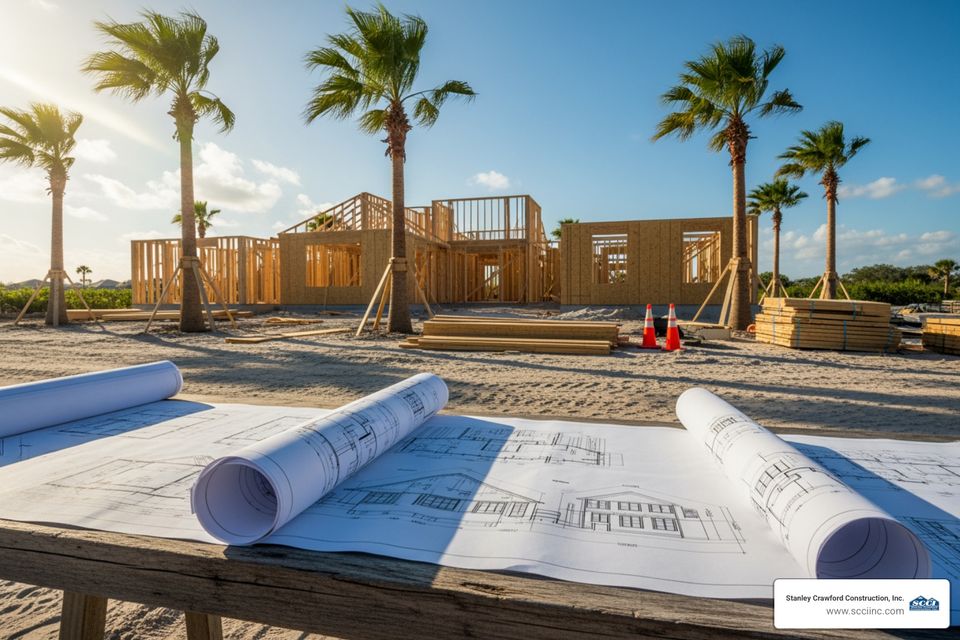
Unleash Your Inner Architect: Top Tools to Design Your Own House Blueprints
Why Designing Your Own House Blueprints is Easier Than You Think
House design blueprints design your own is no longer a pipe dream reserved for architects. With today's accessible tools and software, homeowners across High Springs FL, Alachua FL, Gainesville FL, Newberry FL, and the Town of Tioga FL can create preliminary house plans that capture their vision before working with professionals.
Quick Answer: How to Design Your Own House Blueprints
Define your needs - family size, lifestyle, must-have features, and budget
Focus on functionality - room flow, traffic patterns, and storage solutions
Choose your design method - hand sketches, graph paper, or floor plan software
Use design tools - RoomSketcher, Floorplanner, or Floor Plan Creator for 2D/3D visualization
Personalize details - finishes, smart home features, and outdoor spaces
Partner with professionals - architects and builders finalize plans for permits and construction
Over 30 million people worldwide now use digital floor plan tools to visualize their dream homes.
These platforms make it simple to experiment with layouts, test furniture placement, and create 3D walkthroughs—all before spending a dime on construction.
The truth is, you don't need special training to sketch out your ideal home. What you do need is a clear vision of how you want to live, some basic knowledge of design principles, and the right tools to bring your ideas to life.
The real benefit? When you arrive at your builder's office with a well-thought-out floor plan, you save time and money on design revisions. You've already done the hard work of imagining your space.
An experienced custom home builder like Stanley Crawford Construction can then transform your DIY blueprint into permit-ready plans that meet all local building codes in North Central Florida.
This guide walks you through the entire process—from defining your family's needs to choosing the right software, and finally partnering with professionals who can make your vision structurally sound and code-compliant.
Understanding House Blueprints and the DIY Advantage
When we talk about house design blueprints design your own, we're diving into the very foundation of your future home. So, what exactly is a house plan or blueprint, and why are they so important?A house plan, often referred to as a blueprint, is essentially a detailed graphical representation of your home's layout. It illustrates the arrangement of rooms, the placement of walls, windows, doors, stairs, and even fixed installations like plumbing fixtures.
These plans are usually drawn to scale and indicate room types, sizes, and key wall lengths. They can even include suggested furniture layouts and built-out outdoor areas like terraces and balconies.
Blueprints are crucial because they serve as the primary communication tool between you, your architect, and your builder. They provide a clear, unambiguous guide for construction, ensuring everyone is working towards the same vision.
Beyond guiding the build, floor plans are vital for permit applications, as many local authorities require them to ensure compliance with zoning laws and building codes. Without a solid blueprint, construction would be a chaotic and error-prone endeavor.
The exciting news is that you absolutely can design your own house plan! This DIY approach offers significant benefits. First, it can lead to substantial cost savings on initial architectural design fees.
By presenting a detailed preliminary plan, you provide your builder and design team with a clear starting point, potentially reducing their billable hours for conceptual design.
Second, it allows for ultimate personalization. You get to pour your unique vision, lifestyle, and aesthetic preferences directly into the design, ensuring the final home truly reflects who you are.
This hands-on involvement also fosters a deeper understanding of your home's structure and flow, leading to better communication with your chosen builder.
What's Included in a Professional Blueprint?
While your DIY floor plan will be a fantastic starting point, a professional blueprint set is comprehensive and includes several specialized drawings:- Floor Plans: These show the layout of each story, including rooms, dimensions, doors, windows, and built-in elements.
- Elevations: These are exterior views of all four sides of the house, detailing materials, rooflines, and window/door styles.
- Foundation Plan: This outlines the foundation type (e.g., slab, crawl space, basement) and its dimensions, footings, and structural supports.
- Roof Plan: This shows the shape, slope, and materials of the roof, as well as any vents or skylights.
- Electrical and Plumbing Schematics: These detail the location of outlets, switches, light fixtures, and the routing of water supply and drainage pipes.
- Cross-sections: These cut through the house at various points to show structural relationships, ceiling heights, and material connections that aren't clear from other views.
The Benefits of Designing Your Own House Plan
The advantages of personalizing a home's design, starting with your own blueprint, are immense. This isn't just about aesthetics; it's about creating a space that truly works for you and your family.- Ultimate Personalization: This is your chance to make every square foot count. Your home's design will reflect your lifestyle, personality, and aspirations, making it a sanctuary that's uniquely yours.
- Reflecting Your Lifestyle: Whether you envision an open-concept kitchen for entertaining, a dedicated home office for remote work, or a cozy reading nook, designing your own plan ensures these elements are integrated from the start.
- Cost-Effectiveness: As mentioned, a well-defined personal plan can save you money on initial design phases, allowing architects to focus on structural integrity and code compliance rather than conceptualizing your basic layout.
- Better Communication with Builders: When you have a clear vision, it's easier to convey your expectations to your builder. This reduces misunderstandings and helps ensure the final product aligns with your dreams.
- Clear Vision: The process of designing your own plan forces you to think through every detail, giving you a strong, clear vision of your dream home long before construction begins.
We're passionate about helping our clients achieve their ideal living spaces. You can learn more about our comprehensive Services for custom home building.
The Essential 5-Step Guide to House Design Blueprints: Design Your Own
This section provides a step-by-step process for creating a preliminary house plan that captures your vision and needs, forming a solid foundation for working with professionals.
Step 1: Define Your Vision, Needs, and Priorities
Before you even think about drawing lines on paper (or a screen!), the first crucial step in house design blueprints design your own is to clearly define your vision. This is where you dream big and articulate how you want your home to support your life.
- Family Size & Lifestyle Needs: How many people will live in the home? Do you have children, or plan to? Do you frequently host guests? Is remote work a priority, necessitating a dedicated home office? Do you love to entertain, requiring large common areas or an open-concept kitchen?
- Architectural Style: Are you envisioning a modern minimalist oasis, a cozy farmhouse retreat, a charming Craftsman, or something else entirely? Looking at homes in your area, such as those in High Springs FL, Alachua FL, Gainesville FL, Newberry FL, and the Town of Tioga FL, can provide excellent inspiration and help you understand local architectural trends.
- Must-Haves vs. Wants: Make a list! Distinguish between features you absolutely cannot live without (e.g., a certain number of bedrooms/bathrooms, a two-car garage) and those that would be nice to have if the budget allows (e.g., a gourmet kitchen, a dedicated media room). This helps prioritize your choices later.
- Budgeting Basics: While you're not getting into detailed costs yet, have a general idea of your financial comfort zone. This will inform the scale and complexity of your design.
By considering these factors, you're laying the groundwork for a home that truly reflects your unique style and requirements.
Step 2: Focus on Functionality and Flow
Once your vision is clear, it's time to think about how your home will work. Functionality is just as important as aesthetics. This step is about optimizing the layout for efficiency, convenience, and comfort.- Room-by-Room Analysis: Consider the purpose of each space. How will you use your kitchen, living room, bedrooms, and bathrooms? Do you need a formal dining room, or would a larger eat-in kitchen suffice?
- Traffic Patterns: Imagine yourself moving through the house. Are pathways clear and logical? Does the layout promote easy movement between frequently used areas (e.g., kitchen to dining, bedroom to bathroom)? Avoid "dead ends" or rooms that are difficult to access.
- Open-Concept vs. Traditional: Do you prefer a vast, interconnected living space, or do you value distinct, private rooms? Each approach has its benefits, and your preference will heavily influence your floor plan.
- Storage Solutions: We all need storage! Think about built-in shelving, pantry size, linen closets, and mudrooms. A well-designed mudroom or laundry space with custom storage can significantly improve daily living. Consider clever hidden storage solutions, like under-stair drawers, to maximize every inch.
Focusing on functionality ensures that your layout promotes efficiency and convenience, making your home a joy to live in every day. For more ideas on changing your living space, check out our insights on 10 Home Remodeling Ideas to Transform Your Living Space.
Step 3: From Sketch to Software: Tools to Design Your Own House Design Blueprints
Now that you have your vision and functional requirements, it's time to bring your house design blueprints design your own ideas to life. There are several ways to approach this, depending on your comfort level with technology.You can start with traditional methods:
- Hand-drawing: Grab a pencil and paper and sketch out rough ideas.
- Graph paper: This provides a grid to help you maintain scale and proportion.
- Tracing existing plans: Find a plan you like and trace it, then modify it to fit your needs.
However, for a truly immersive and accurate experience, we highly recommend embracing the benefits of using floor plan software for design. These tools have revolutionized how we visualize and plan spaces.
- 3D Visualization: Platforms like RoomSketcher and Floorplanner allow you to create 2D floor plans and then instantly switch to a 3D view. This helps you visualize how a space will look and feel, test furniture placement, and even take virtual 3D walkthroughs. This visual confidence is invaluable in making design decisions.
- Accuracy & Detail: Software enables precise numerical input for dimensions, ensuring your plans are accurate. You can add symbols for furniture, appliances, doors, and other elements from extensive libraries, making your design realistic and functional. Custom dimension lines allow you to fine-tune every aspect of your layout.
- Templates & Customization: Many software options offer ready-made floor plan templates, which are excellent starting points for quick idea generation. You can easily customize these templates or even create and share your own.
- Collaboration & Accessibility: Most platforms offer cloud synchronization, allowing you to access and edit your projects across multiple devices. Many also support sharing projects with others, which is great for getting feedback or collaborating with family members.
Consider tools like:
- Floor Plan Creator: Available as an Android app and a web application, it offers features for quick and precise design, 3D mode visualization, and various export formats. You can even get bonus projects for the web version with Android app purchases.
- RoomSketcher: With over 10 million users, RoomSketcher allows you to create and visualize house plans in minutes. It supports scanning properties with LiDAR data (from an iPhone/iPad) and converting sketches or computer-drawn plans into editable digital formats. You can also browse their collection of ready-made house plans, including two-bedroom, four-bedroom, and multi-family layouts. For a quick start, you can Create a Free Account and explore their pricing options.
- Floorplanner: Boasting over 30 million users worldwide and 50 million projects created, Floorplanner emphasizes ease of use and versatility. It offers a vast library of over 260,000 3D models and the ability to create stunning 8K resolution 3D renders. Many users find it incredibly versatile, as one user noted, "I use Floorplanner every time we move house it's pretty versatile". You can Create your own account and start planning your space for free.
These tools make it incredibly easy for beginners and professionals alike to design accurate and visually compelling floor plans.
Step 4: Personalizing Your Design Details
Once the basic layout is in place, it's time to infuse your personality into every detail. This is where your house design blueprints design your own truly shine, reflecting your unique style.- Interior Finishes: Think beyond paint colors. Consider unique flooring choices like hardwood patterns or mixed textures. Select custom hardware for faucets, cabinet pulls, and door handles that fit your aesthetic. Accent walls or custom wallpapers can add significant character.
- Smart Home Integration: Modern living often means smart living. Integrate smart home features from the blueprint stage. This could include smart thermostats for energy efficiency, automated lighting systems that adjust to your schedule, or integrated security systems. Voice-controlled devices can provide a futuristic and convenient living experience.
- Outdoor Living Spaces: Don't forget the outside! Personalizing outdoor spaces extends your living area and improves curb appeal. Consider custom patios, fire pits, or elaborate outdoor kitchens for entertaining. Landscaping that resonates with your style, or even a pool or water feature, can create a private oasis. RoomSketcher, for example, allows you to easily add outdoor elements like furniture, plants, and decks to your plans.
- Meaningful Decor & Lighting: While decor comes later, consider how your blueprint will accommodate it. Built-in shelving for displaying family heirlooms or artwork can be part of the design. Lighting is also key – statement fixtures, dimmers, colored LED lighting, and functional under-cabinet or toe-kick lighting can dramatically alter a home's ambiance and utility.
For specific ideas on enhancing functional spaces like bathrooms, our Bathroom Remodeling Tips to Maximize Your Space and Comfort can provide inspiration.
From DIY Blueprint to Building Your Dream Home
A DIY blueprint is a powerful start, but turning it into a structurally sound, code-compliant home requires professional expertise. This section explains how to bridge that gap.
Why You Still Need a Professional for Your House Design Blueprints:
Design Your Own
While designing your own preliminary house design blueprints design your own is an excellent first step, it's crucial to understand that professional expertise is indispensable for the actual construction phase.Your detailed floor plan provides a fantastic foundation, but it needs to be transformed into permit-ready construction documents by licensed professionals.
- Role of Experienced Builders and Designers: An architect or designer will take your vision and ensure its structural integrity. They'll refine your drawings, adding essential details about materials, structural components, and engineering specifications that ensure the house is safe and sound. At Stanley Crawford Construction, we collaborate with a network of trusted architects and designers to bring your vision to life.
- Local Building Codes & Permit-Ready Plans: Every region, including Gainesville FL, Alachua FL, High Springs FL, Newberry FL, and the Town of Tioga FL, has specific building codes and regulations. Professionals are adept at navigating these complex requirements, ensuring your plans comply with everything from zoning laws to energy efficiency standards. They will prepare the comprehensive set of blueprints required to obtain building permits. Without a stamped and approved set of plans, construction cannot legally begin.
- The DIY Plan as a Starting Point: The beauty of your DIY plan is that it significantly streamlines this professional phase. As we've seen, having your own house floor plan means the architect isn’t starting from scratch. You already have a good idea of your dream home design, which allows the professionals to focus on the technical details and convert your vision into a blueprint relatively quickly. This collaborative approach saves both time and money.
How to Find the Right Custom Home Builder
Choosing the right custom home builder is perhaps the most critical decision after finalizing your design. They are the ones who will translate your house design blueprints design your own vision into a tangible reality.- Experience and Reputation: Look for builders with a proven track record. Stanley Crawford Construction, Inc. brings over 40 years of experience to custom home building in Florida, ensuring a wealth of knowledge and expertise.
- Reviewing Portfolios: Examine their past projects. Do their completed homes align with your aesthetic and quality expectations? Our Gallery showcases some of our proudest achievements.
- Communication Style: Effective communication is paramount. You need a builder who listens, understands your vision, and keeps you informed throughout the process. At Stanley Crawford Construction, we pride ourselves on a collaborative approach, ensuring you are part of the team every step of the way.
- Local Knowledge: A builder familiar with building in communities like High Springs FL, Alachua FL, Gainesville FL, Newberry FL, and the Town of Tioga FL will understand local regulations, climate considerations, and preferred suppliers. This local expertise is invaluable. For more guidance, read our article on How to Find the Right Home Builder Near Lake City, Florida and specific information for Custom Home Builder High Springs Florida.
Prioritizing Quality, Durability, and Flexibility
When building your custom home, prioritizing quality and durability isn't just about luxury; it's about investing in the long-term value and comfort of your home.- Importance of Quality Materials: High-quality materials and construction techniques are essential for longevity. This includes choosing durable roofing, energy-efficient windows, and resilient flooring that will stand the test of time and climate in Florida. Investing wisely upfront can save you significant repair and maintenance costs down the line.
- Long-Term Value: A well-built home with quality materials will not only last longer but also retain its value better, should you ever decide to sell. It's a testament to thoughtful planning and expert craftsmanship.
- The Construction Process: Throughout the build, maintaining open communication and flexibility is key. Your needs may evolve, or unexpected challenges might arise. A good builder will work with you to address these promptly, ensuring your vision is realized to perfection. This collaborative spirit is central to our approach at Stanley Crawford Construction.
We take pride in our commitment to quality and client satisfaction. Learn more About our company and our dedication to building exceptional homes.
Frequently Asked Questions about Designing Your Own House Blueprints
Can I legally build a house from my own blueprints?
No, in most cases. While your DIY blueprints are an excellent starting point, they typically need to be reviewed, finalized, and stamped by a licensed architect or engineer.This professional endorsement ensures that your plans meet all structural requirements, safety standards, and local building codes before a permit can be issued for construction.
How much money can I save by designing my own floor plan?
You can save significantly on the initial architectural design fees. Providing a detailed floor plan gives the builder and design team a clear and advanced starting point, reducing their billable hours for the conceptual design phase.This means less time spent on preliminary sketches and more time focused on refining your existing vision, translating directly into cost savings for you.
What's the best way to design house blueprints if I'm a beginner?
For beginners, the best way to start is by combining initial hand sketches with user-friendly floor plan software.Begin with graph paper to get a feel for scale, then transition to intuitive software or apps like RoomSketcher, Floorplanner, or Floor Plan Creator. Look for tools with:
- An intuitive interface that requires no CAD knowledge.
- Easy-to-use 2D drawing tools for creating rooms, walls, and openings.
- Robust 3D visualization capabilities for seeing your design come to life.
- A comprehensive library of furniture, fixtures, and materials to populate your space.
- The ability to easily modify and adjust elements. Many platforms offer free versions or trials to help you get started without immediate financial commitment.